
Cambridge Surrenders 116 Benin Bronzes to Nigeria — and the British Museum Has Nowhere Left to Hide

Reading Time: 7 minutesThe University of Cambridge has formally transferred ownership of 116 Benin Bronzes to Nigeria’s National Commission for Museums and Monuments, completing a decade-long repatriation dialogue and establishing a legal precedent that other UK institutions can follow. The objects — cast brass commemorative heads, ceremonial plaques, and intricately worked regalia — were seized during the British military’s 1897 sacking of Benin City. Physical repatriation is expected before the end of 2026, with works destined for museums in Lagos and Benin City. The move intensifies scrutiny on the British Museum, which holds approximately 900 Benin objects and remains the largest institutional holdout against repatriation. Cambridge’s success in obtaining UK Charity Commission approval for the transfer dismantles the legal defence that other charitable trusts have cited as an insurmountable barrier to returning colonial-era seizures.

The Empty Vitrine: How Africa Is Building the Infrastructure to End the Oldest Excuse for Keeping Its Heritage

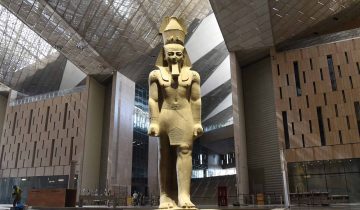
Reading Time: 11 minutesFor two centuries, Western museums told African nations: you cannot protect your own heritage. In 2026, that argument meets a billion-dollar museum on the Giza Plateau, 119 Benin Bronzes returned to Nigeria, a Manhattan DA unit that has recovered $470 million in looted antiquities, and an African Union framework that has elevated restitution from bilateral grievance to continental policy. The vitrines are filling. The question is who will be remembered as the last to let go.

The Alchemy of Refusal: El Anatsui and the Art of Making Empires Visible Through Their Waste

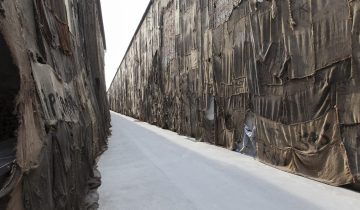
Reading Time: 12 minutesThe hype says El Anatsui turns scrap metal into gold. The reality is more disruptive: he turns colonial waste into objects so compelling that the very institutions built on that trade history cannot look away. At 81, with commissions from Tate to the Vienna Opera and a radical return to wood, Anatsui is redefining what a late career — and African art itself — demands of the world.
The Mehretu Effect: How One Ethiopian-American Painter Is Rewriting the Rules of Power, Value, and Legacy in Global Art

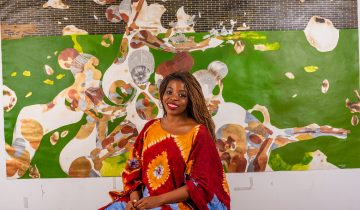
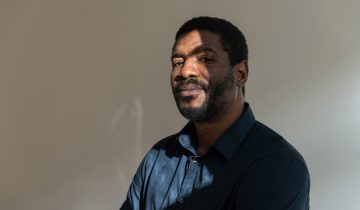
Reading Time: 11 minutesBeyond the record-breaking auction prices and blockbuster museum surveys, Julie Mehretu is doing something far more consequential — channelling her status as the highest-selling African-born artist into pan-continental creative infrastructure, a monumental commission at the Obama Presidential Center, and a sustained argument that abstraction remains the most radical political language painting has to offer.

MoMAA African & Diaspora Art Market Outlook 2026

Reading Time: 7 minutesWhile the global art market contracted 12% in 2024, African art demonstrated remarkable stability—characterized by institutional integration, reduced speculation, and sustained collector demand. This MoMAA outlook examines auction performance, confidence indicators, price segments, and 2026 projections using verified data from Art Basel/UBS, ArtTactic, and major auction houses.

Beyond Ownership: Five Models Reshaping How Africa Recovers Its Cultural Heritage

Reading Time: 8 minutesThe question dominating African cultural heritage debates has been “who owns it?” But as restitution accelerates—with the AU declaring 2025 the “Year of Reparations”—a more productive question emerges: “How should communities steward returning heritage?” Five distinct governance models are providing answers, from Nigeria’s royal custodianship to Benin Republic’s state institutions.

France Takes Historic Step Toward Returning Looted African Art: Senate Unanimously Adopts Restitution Bill

Reading Time: 8 minutesFrance’s Senate has unanimously adopted a bill that could fundamentally transform colonial-era restitution. The legislation—20 years in the making—replaces case-by-case parliamentary votes with streamlined scientific review. With 13 countries awaiting returns including Benin’s iconic God Gou sculpture, the bill represents France’s most significant step toward honoring President Macron’s 2017 promises.

Turkey Offers to Return 76 Nigerian Artifacts: A New Chapter in African Art Repatriation

Reading Time: 8 minutesTurkey has identified 76 wooden and metal artifacts believed to belong to Nigeria and signaled willingness to return them—the first time this aggressive repatriation champion has proactively offered to return African heritage. Announced during President Tinubu’s state visit to Ankara, this unexpected move positions Turkey as a surprising new ally in Africa’s cultural reclamation.

Art Basel Qatar 2026: The African Artists You Need to Know

Reading Time: 6 minutesArt Basel’s Gulf debut features significant African presence—from Ghanaian master El Anatsui at October Gallery to rising Moroccan voices like Meriem Bennani. With an Egyptian artistic director and over half the artists from the MENASA region, Art Basel Qatar 2026 offers unprecedented visibility for African contemporary art. Here’s your complete guide

The Sarr-Savoy Report Explained

Reading Time: 6 minutesIn November 2018, a 108-page report delivered to French President Emmanuel Macron transformed the debate over African art repatriation. Written by Senegalese economist Felwine Sarr and French art historian Benedicte Savoy, the report argued that African cultural heritage should be returned to Africa. Its recommendations sparked action across Europe and continue shaping repatriation policy today.

Julie Mehretu BMW Art Car & AFMAC Pan-African Initiative

Reading Time: 6 minutesWhen BMW asked Julie Mehretu to paint a race car, the Ethiopian-born artist gave them something far more ambitious: a vehicle for continental connection. Her M Hybrid V8 competed at Le Mans, then anchored AFMAC—workshops across five African cities. The project culminates at Zeitz MOCAA in December 2026.

Benin Bronzes: Complete History and Returns

Reading Time: 7 minutesThe Benin Bronzes are African art history’s most consequential case study. Created over centuries by master craftsmen in the Kingdom of Benin, looted by British forces in 1897, scattered across 165 museums worldwide, and now returning home in history’s largest repatriation. Understanding the bronzes means understanding colonialism, cultural heritage, and how the art world is finally reckoning with its past.

African Art Repatriation & The New Museum Landscape

Reading Time: 8 minutesThe landscape of African art is transforming. After over a century of colonial extraction, objects are returning home. Germany has sent Benin Bronzes back to Nigeria. France returned treasures to Benin Republic. The Smithsonian is repatriating collections. Meanwhile, new museums across Africa are preparing to receive these works and reshape how the continent tells its own story. For collectors, scholars, and enthusiasts, understanding repatriation is now essential to understanding African art.

African Women Modernist Artists

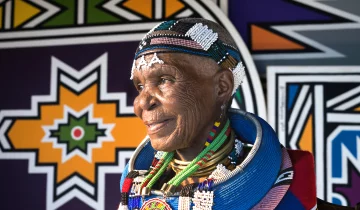
Reading Time: 6 minutesA striking statistic reshapes how we understand African art markets: women artists account for 52.8% of total auction value in African modern and contemporary art. This figure, driven largely by Irma Stern record-breaking sales, reveals a market reality that contradicts assumptions about male dominance in art history. From South African expressionists to Ndebele muralists to Nigerian pioneers, African women modernists created work of extraordinary significance that collectors increasingly recognize and value.

Ben Enwonwu: Nigeria’s Independence Icon

Reading Time: 6 minutesIn February 2018, a painting lost for decades surfaced in a London flat and sold for $1.6 million, setting records for Nigerian art. The artist was Ben Enwonwu, and the painting was Tutu, a portrait of a Yoruba princess that had vanished from public view since 1975. The sale transformed African art markets and brought global attention to an artist who had been Nigeria’s first international art star, sculptor to royalty, and symbol of independence-era ambition.

South African Resistance Art (1960-1994): The Apartheid Era

Reading Time: 7 minutesNo African art movement developed under more hostile conditions than South African resistance art. From the 1960 Sharpeville massacre through the end of apartheid in 1994, Black South African artists faced censorship, imprisonment, exile, and assassination. Yet they produced works of extraordinary power that documented oppression while imagining liberation. Today, these artists command strong auction prices as collectors recognize both artistic merit and historical significance

Julie Mehretu’s “Uprising of the Sun”: Ethiopian-Born Artist Creates 83-Foot Masterpiece for Obama Presidential Center

Reading Time: 5 minutesEthiopian-born artist Julie Mehretu has created “Uprising of the Sun,” an 83-foot glass installation for the Obama Presidential Center in Chicago. Composed of 35 painted panels, it’s one of the most prominent public artworks ever made by an African-born artist. The center opens June 2026.

École de Dakar: Senegal’s Négritude Aesthetic

Reading Time: 6 minutesWhen poet-president Leopold Sedar Senghor led Senegal to independence in 1960, he carried a radical vision: art would build the nation. The Ecole de Dakar was never a formal school but an aesthetic movement shaped by state patronage, Negritude philosophy, and the belief that African identity could be expressed through vivid color, rhythmic composition, and celebration of Black culture. For European collectors drawn to Francophone African art, understanding this controversial yet influential movement is essential.

The Nsukka School: El Anatsui & The Second Generation

Reading Time: 7 minutesWhen Uche Okeke brought his Natural Synthesis philosophy to the University of Nigeria,
Nsukka in the early 1970s, he transformed a university art department into the most
influential incubator of contemporary African art. The Nsukka School produced El
Anatsui—whose shimmering bottle-cap sculptures now command millions at
auction—alongside Obiora Udechukwu, Tayo Adenaike, and other artists who carried uli-
inspired aesthetics onto the global stage. This is the story of how a teaching philosophy
became a movement that redefined what African art could be.

The Zaria Rebels: Nigeria’s Art Revolution (1958-1965)

Reading Time: 8 minutesIn 1958, a group of Nigerian art students at Zaria declared war on colonial aesthetics. Led by Uche Okeke, the Zaria Art Society—later known as the Zaria Rebels—crafted the Natural Synthesis manifesto that would revolutionize African art. Their radical proposition: reject both blind imitation of European masters and nostalgic return to pre-colonial forms, instead forging a distinctly modern Nigerian visual language. Six decades later, their influence shapes everything from contemporary African art to record-breaking auction prices.

The Complete Guide to African Art Movements: Schools, Manifestos & Masters (1900-2000)

Reading Time: 9 minutesFrom the revolutionary Natural Synthesis manifesto of the Zaria Rebels to the politically charged canvases of South African resistance artists, African art movements of the twentieth century forged new visual languages that challenged colonial aesthetics while celebrating indigenous traditions. This comprehensive guide traces the major schools, their founding masters, and their enduring influence on the contemporary art market—essential knowledge for collectors, scholars, and enthusiasts navigating the rapidly evolving landscape of African modernism.

The Art Collector’s Calendar 2026: Must-See Exhibitions, Biennials & Art Fairs Worldwide

Reading Time: < 1 minuteFrom the historic Venice Biennale curated by the late Koyo Kouoh to groundbreaking retrospectives at MoMA and Tate, 2026 promises to be a watershed year for art collectors and enthusiasts. This comprehensive guide maps out the essential exhibitions, biennials, and art fairs across five continents—complete with dates, ticket information, and insider tips for navigating the global art calendar.

Museum Anniversary Planning for Picasso Hopper and O’Keeffe Through 2031

Reading Time: 8 minutesMajor artist anniversaries drive museum planning years in advance. Picasso’s 150th birthday in 2031 will prompt unprecedented global exhibitions coordinated across institutions. Museums invest heavily because anniversaries deliver blockbuster attendance, justify acquisition campaigns, and enable scholarly reassessment. The process requires five-year timelines securing international loans, developing curatorial frameworks, and coordinating to avoid competing for identical works.

The 2027-2028 American Art Biennial Circuit: What to Expect from the Whitney, Carnegie, and Beyond

Reading Time: 10 minutesThe Whitney Biennial 2028 and Carnegie International 2027 anchor the next biennial circuit—high-stakes survey exhibitions identifying emerging artists, establishing aesthetic directions, and revealing contemporary art’s urgent concerns. These aren’t casual group shows but institutional statements where curators make careers and cultural conversations shift. The 2027-2028 cycle arrives as first major surveys following pandemic disruptions and institutional reckonings around diversity and social justice, revealing whether commitments translated to practice. Expect continued demographic diversity, climate crisis engagement, digital/AI integration, and craft resurgence across both exhibitions.

MoMA PS1 at 50: How a Queens Institution Celebrates a Half-Century of Avant-Garde Art

Reading Time: 22 minutesMoMA PS1’s fiftieth anniversary in 2026 celebrates half-century championing experimental contemporary art from converted Queens school building. Founded 1976 by Alanna Heiss as alternative space for artists, PS1 pioneered transforming abandoned buildings into exhibition venues and supporting emerging practices mainstream museums ignored. Three years of free admission (funded by Sonya Yu’s $900,000 gift) makes PS1 New York’s largest completely free art museum starting January 2026. “Greater New York” opens April 16 featuring 47 artists selected by collaborative curatorial process—quinquennial survey examining NYC contemporary art’s current state. Anniversary exhibitions include Vaginal Davis (performance artist and cultural provocateur) and Gabrielle Goliath (South African artist addressing gender-based violence). Summer “Warm Up” music series continues outdoor parties in courtyard. The 2000 MoMA merger provided financial stability while PS1 retained experimental programming independence. Queens location in gentrifying Long Island City creates complex relationship between cultural institution and neighborhood transformation. Free admission during anniversary year allows broad audiences experiencing challenging contemporary practice at institution that shaped alternative art space model globally.

Feeling Art: Lucy Sparrow’s Felt Supermarket Takes Over The Momentary in 2026

Reading Time: 24 minutesBritish artist Lucy Sparrow converts The Momentary in Bentonville, Arkansas into fully-stocked felt convenience store for summer 2026—20,000 hand-sewn items ranging from Cheerios boxes to tampons, Coca-Cola to cigarettes, all meticulously crafted from felt and available for purchase. The immersive installation continues Sparrow’s practice replicating retail environments through months of labor-intensive craft, transforming consumer products into soft sculptures that simultaneously celebrate and critique American consumer culture. Located in Walmart’s hometown at museum funded by retail fortune, “Sparrow Mart” generates particular irony—handcrafted slow production versus mass retail efficiency, unique art objects versus standardized products, expensive felt replicas versus “everyday low prices.” Visitors can browse aisles, touch designated products, photograph extensively, and purchase pieces at $20-200. Free admission at The Momentary democratizes access to contemporary art practice engaging Pop Art traditions, feminist craft reclamation, and participatory installation while remaining accessible to audiences of all ages and art knowledge levels. Sparrow’s felt groceries prove contemporary art can be intellectually sophisticated, visually delightful, and genuinely fun simultaneously.

The Museum Odyssey: What the 2026 AAM Conference in Philadelphia Means for the Future of Art Institutions

Reading Time: 26 minutesSeven thousand museum professionals convene in Philadelphia May 20-23, 2026 for the American Alliance of Museums annual conference—the museum sector’s most important professional gathering. Timing carries particular significance: Philadelphia hosts during America’s 250th anniversary while presenting “A Nation of Artists” (1,000+ works at PMA and PAFA). Conference sessions address urgent sector challenges: financial sustainability post-pandemic, DEAI implementation beyond rhetoric, repatriation ethics, staff unionization, climate crisis response, and museums’ democratic roles in polarized era. For individual professionals, conference delivers skill development, networking, career advancement, and morale boost combating isolation. For sector collectively, Philadelphia 2026 shapes policies, establishes standards, initiates collaborations, and builds resilience enabling museums to navigate uncertain futures while serving diverse publics. Beyond four conference days, conversations emerging from Philadelphia influence museum practice nationwide for years—making this gathering consequential far beyond immediate attendance.

Grandma Moses at Crystal Bridges: How America’s Most Famous Folk Artist Gets Long-Overdue Scholarly Reassessment

Reading Time: 17 minutesAnna Mary Robertson Moses began painting seriously at seventy-eight and achieved international fame by eighty-five, yet art historians have spent decades apologizing for her popularity. “Grandma Moses: A Good Day’s Work” at Crystal Bridges Museum in summer 2026 represents the first major retrospective in over twenty years willing to take Moses seriously as visual artist rather than dismissing her as charming anachronism. The exhibition treats Moses’s nostalgic rural scenes as sophisticated formal achievements deserving the same analytical attention applied to academically-trained contemporaries. Her flattened perspectives, jewel-toned color harmonies, and meticulous narrative details demonstrate intentional artistic choices rather than naive primitiv ism. The show challenges art world hierarchies separating “folk” from “fine” art, questions whether popularity should disqualify work from serious consideration, and positions Moses within mid-20th-century American art landscape examining connections to American Scene painters and tensions with contemporary abstract expressionism. Crystal Bridges’ free admission policy and Arkansas location democratize access to world-class American art programming, aligning institutional values with Moses’s own working-class background and outsider status within art establishment.

Commemorating 250: How America’s Leading Museums Transform the Semiquincentennial Into Cultural Reckoning

Reading Time: 14 minutesAmerica’s 250th anniversary in 2026 inspires the most comprehensive museum examination of American art and identity in generations. The Philadelphia Museum of Art and Pennsylvania Academy of the Fine Arts unite for “A Nation of Artists”—over 1,000 works across three centuries including 120 masterpieces from the private Middleton Collection. Crystal Bridges presents “America 250: Common Threads” exploring how art has shaped civic participation since 1776. Smithsonian institutions coordinate programming across multiple museums examining democracy, portraiture, and national character. Unlike the celebratory 1976 bicentennial, 2026 museum programming embraces complexity—foregrounding Indigenous, African American, immigrant, and marginalized voices alongside canonical figures, acknowledging contested histories, and asking difficult questions about whose stories American art has told and whose it has silenced. Regional museums from Atlanta’s High Museum to Arkansas’s Crystal Bridges demonstrate that American art history isn’t merely coastal narrative but genuinely national phenomenon. The concentrated institutional resources, scholarly catalogues, and public programs make 2026 exceptional year for understanding American creativity, with exhibitions extending well into 2027 and scholarly impacts lasting decades.

The Great Museum Tour: 2026’s Most Important Traveling Exhibitions You Can See in Multiple Cities

Reading Time: 18 minutesThe 2026 traveling exhibition calendar includes several genuinely exceptional presentations worth planning significant trips around. “Vermeer and the Dutch Interior” reunites twenty-eight of thirty-seven known Vermeer paintings at Rijksmuseum Amsterdam and National Gallery Washington DC—viewing opportunity unlikely to recur for another generation. “Indigenous Futurism” tours five museums presenting work by Indigenous artists engaging science fiction aesthetics and future-oriented storytelling challenging colonial narratives. Comprehensive Frida Kahlo retrospective travels from San Francisco to Chicago to Houston with sixty paintings examining her sophisticated artistic practice beyond biographical reductions. “Contemporary African Photography Now” showcases forty photographers from fifteen countries demonstrating continental diversity. These aren’t routine touring shows but rare scholarly undertakings bringing together works normally scattered across continents, offering viewing experiences genuinely unavailable otherwise and unlikely to repeat soon.

Keith Haring in 3D: The Groundbreaking Exhibition Redefining an Icon’s Legacy at Crystal Bridges

Reading Time: 14 minutesSummer 2026 brings art historical revelation to Crystal Bridges Museum: “Keith Haring in 3D,” the first major exhibition exclusively examining Keith Haring’s sculptural practice. While most audiences know Haring (1958-1990) through subway chalk drawings, iconic murals, and bold graphic paintings, his three-dimensional work—bronze sculptures, painted totems, installations, stage designs—has remained under-researched and under-exhibited. This comprehensive survey presents work scattered across collections worldwide, finally receiving scholarly attention commensurate with Haring’s two-dimensional achievements. Opening alongside Crystal Bridges’ $150 million expansion, the exhibition demonstrates how Haring’s graphic vocabulary transforms when translated into bronze, steel, and spatial installations. Visitors encounter radiant babies cast in metal, painted sculptures activating gallery space, and stage set designs for activist performances. The groundbreaking presentation, backed by first scholarly catalogue dedicated to Haring’s sculptural practice, arrives at Arkansas museum offering free admission—democratizing access in ways Haring himself championed through Pop Shop and public murals. For anyone searching for essential art exhibitions 2026, this represents once-in-a-generation opportunity to comprehensively understand beloved artist’s complete vision.

Art for All: How MoMA PS1’s Free Admission Revolutionizes Access to Contemporary Art in 2026

Reading Time: 14 minutesOn January 1, 2026, MoMA PS1 eliminates admission fees for all visitors, becoming New York City’s largest completely free art museum. Made possible by creative entrepreneur Sonya Yu’s $900,000 gift, this three-year initiative transforms access to cutting-edge contemporary art during the institution’s 50th anniversary. Founded in 1976 in an abandoned Queens public school, PS1 has launched careers, defined experimental practices, and challenged institutional conventions for half a century. The free admission policy extends founding principles of democratization and alternative practice into contemporary context, arriving as “Greater New York”—the influential quinquennial survey of NYC contemporary art—opens April 16 featuring 47 artists and collectives. While major Manhattan museums charge $30 admission, PS1 offers unrestricted access to 125,000 square feet of exhibition space, performance programming, and the legendary Warm Up summer music series. For museum professionals and visitors alike, PS1’s bold experiment asks fundamental questions: Why should cultural institutions essential to civic life operate on commercial models? If art enriches communities, shouldn’t access be universal?

Photography Investment – Collecting Fine Art Photography for Profit

Reading Time: 14 minutesMaster fine art photography investment with expert guidance on collecting strategies, market analysis, authentication protocols, and portfolio construction. Learn to evaluate photographers, understand edition structures, navigate auction markets, and build profitable photography collections while managing unique preservation and technical considerations.

Crystal Bridges at 15: How a $150 Million Expansion Transforms America’s Most Unexpected Art Museum

Reading Time: 14 minutesOn June 6-7, 2026, Crystal Bridges Museum of American Art opens its transformative $150 million expansion—50% more space designed by Moshe Safdie—alongside three landmark exhibitions: Keith Haring in 3D, the first comprehensive look at the iconic artist’s sculptural work; Grandma Moses: A Good Day’s Work, reexamining the folk art legend; and America 250: Common Threads, exploring how art has shaped American identity across 250 years. Founded in 2011 by Alice Walton with the revolutionary principle of permanent free admission, Crystal Bridges has welcomed over 14 million visitors to world-class American art in northwest Arkansas. The expansion solidifies its status among America’s essential art museums, proving that geographic destiny isn’t predetermined and that excellence and accessibility aren’t contradictory goals. With 200+ recent acquisitions from major donors, complete collection reinstallation, new educational studios, and continued free entry, Crystal Bridges’ 15th anniversary marks its evolution from improbable experiment to American art powerhouse.

A Nation of Artists: How Philadelphia’s Dual-Museum Exhibition Redefines America’s Art Legacy in 2026

Reading Time: 11 minutesIn April 2026, Philadelphia transforms into America’s art capital as the Philadelphia Museum of Art and Pennsylvania Academy of the Fine Arts unveil A Nation of Artists—a unprecedented dual-venue exhibition presenting over 1,000 works across three centuries. From Charles Willson Peale’s early American realism to Mark Rothko’s transcendent abstractions, from Mary Cassatt’s impressionist masterworks to Horace Pippin’s powerful narratives, this exhibition redefines American art history by foregrighting Indigenous, African American, immigrant, and historically underrepresented artists alongside canonical figures. The exhibition includes 120 rarely-seen masterpieces from the private Middleton Family Collection and marks the reopening of PAFA’s Historic Landmark Building. Running through 2027, A Nation of Artists offers a once-in-a-generation opportunity to witness American creativity in all its complex, contradictory, magnificent diversity.

Close
Sign in
Close
Cart (0)

No products in the basket. No products in the basket.


Currency


Change Pricing Plan

We recommend you check the details of Pricing Plans before changing. Click Here


EUR12365 daysPackage2 regular & 0 featured listings


EUR99365 daysPackage12 regular & 12 featured listings


EUR207365 daysPackage60 regular & 60 featured listings