
The Louvre’s €32 Gambit: When the World’s Greatest Museum Tells Non-Europeans to Pay Up

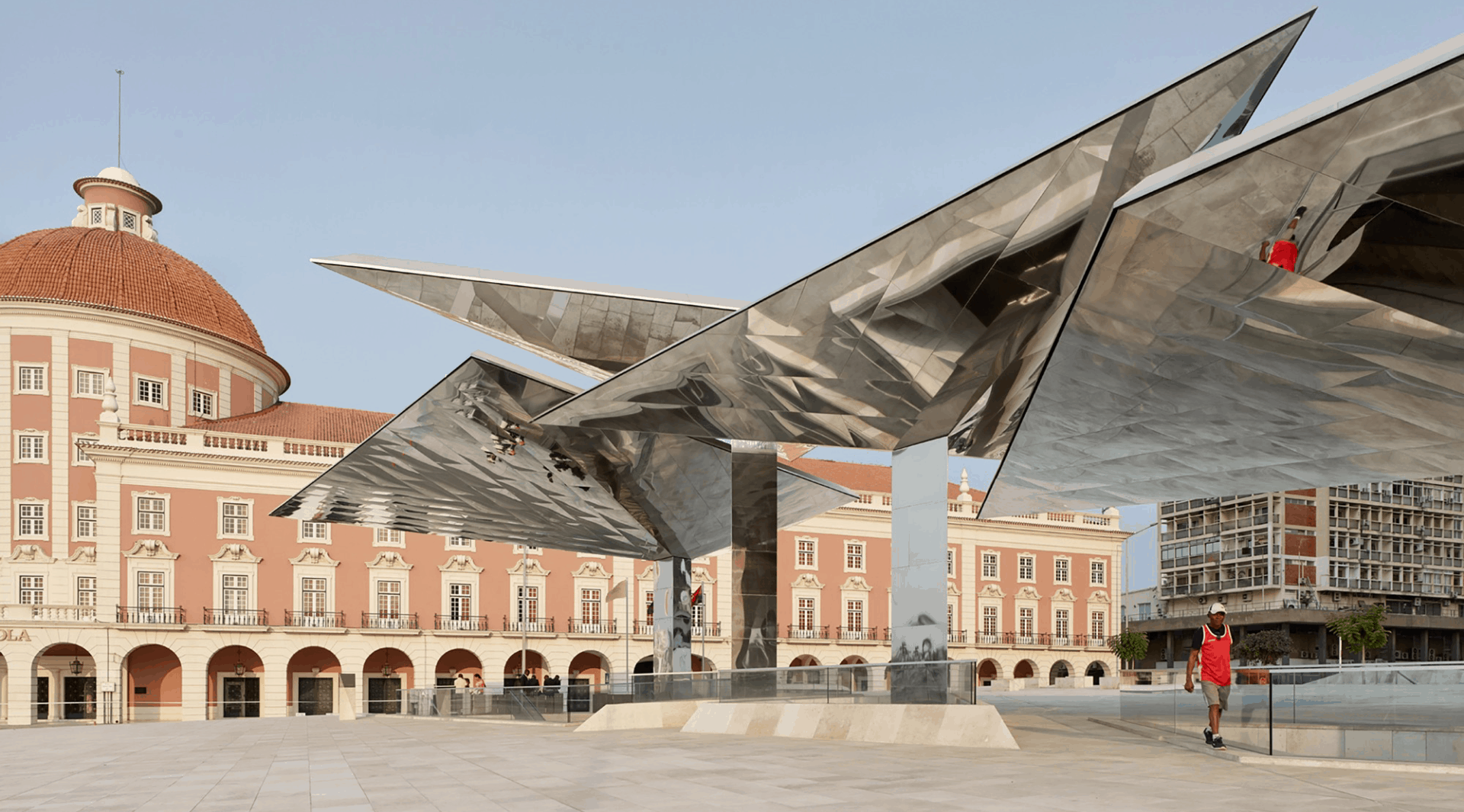
Reading Time: 2 minutesThe world’s most-visited museum is implementing two-tier pricing that charges Americans, Chinese, and British visitors €32—45% more than Europeans. It’s a strategy African cultural sites have used for years, now arriving at the gates of Western art’s most sacred institution.

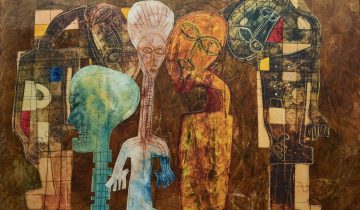
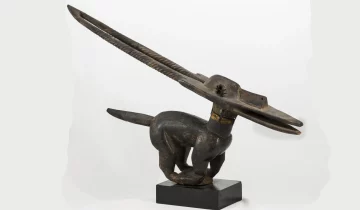
The Complete Guide to African Art Movements: Schools, Manifestos & Masters (1900-2000)

Reading Time: 9 minutesFrom the revolutionary Natural Synthesis manifesto of the Zaria Rebels to the politically charged canvases of South African resistance artists, African art movements of the twentieth century forged new visual languages that challenged colonial aesthetics while celebrating indigenous traditions. This comprehensive guide traces the major schools, their founding masters, and their enduring influence on the contemporary art market—essential knowledge for collectors, scholars, and enthusiasts navigating the rapidly evolving landscape of African modernism.

The Art Collector’s Calendar 2026: Must-See Exhibitions, Biennials & Art Fairs Worldwide

Reading Time: < 1 minuteFrom the historic Venice Biennale curated by the late Koyo Kouoh to groundbreaking retrospectives at MoMA and Tate, 2026 promises to be a watershed year for art collectors and enthusiasts. This comprehensive guide maps out the essential exhibitions, biennials, and art fairs across five continents—complete with dates, ticket information, and insider tips for navigating the global art calendar.

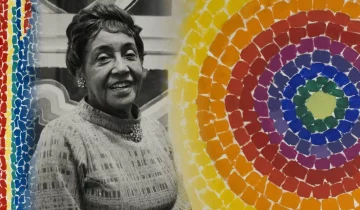
Black Female Artists Today: 30 Names Reshaping Contemporary Art in 2025

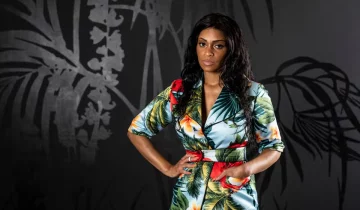
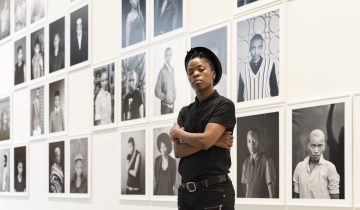
Reading Time: 14 minutesBlack female artists are revolutionizing contemporary art in 2025, commanding museum retrospectives, achieving record auction prices, and fundamentally reshaping institutional definitions of artistic excellence. From Julie Mehretu’s multimillion-dollar abstractions to Amy Sherald’s iconic Michelle Obama portrait, from Zanele Muholi’s visual activism documenting LGBTQ+ communities to Simone Leigh’s historic Venice Biennale representation, these 30 essential artists span painting, sculpture, photography, installation, and new media. Their work addresses urgent contemporary issues—racial justice, gender inequality, colonial legacies—while demonstrating that expanding whose voices are heard enriches rather than dilutes artistic quality. Major institutions including MoMA, Whitney, and Tate Modern have significantly increased representation, with MoMA surpassing men in new acquisitions for the first time in 2025, though activists note equity remains distant despite real progress.

Ablade Glover’s Vibrant Market Scenes: Understanding Ghana’s Master Colorist

Reading Time: 9 minutesProfessor Ablade Glover, born 1934 in Accra and celebrating his 90th birthday in 2024, stands as Ghana’s most internationally recognized living painter. His distinctive thick impasto oil paintings applied with palette knife create optical phenomenon—appearing abstract up close but resolving into bustling Makola Market scenes, lorry stations, and townscapes from viewing distance. Educated at institutions from London to Ohio State University and teaching at KNUST for two decades before retiring in 1994, Glover documents Ghanaian urban life through paintings that celebrate women’s economic power, crowd psychology, and African aesthetic sensibilities. His works hang in the Imperial Palace of Japan, UNESCO Paris, and Chicago’s O’Hare Airport, while his Artists Alliance Gallery in Accra nurtures emerging Ghanaian artists, cementing his legacy as both creator and institution-builder.

Chéri Samba’s Most Provocative Artworks: Titles, Meanings & Market Value

Reading Time: 7 minutesChéri Samba, born 1956 in Democratic Republic of Congo, transforms billboard painting techniques into internationally celebrated contemporary art that functions as visual journalism. Co-founding the Popular Painting movement in 1970s Kinshasa alongside Moké and Pierre Bodo, Samba developed his signature style combining vibrant imagery with text in French and Lingala using comic-strip word bubbles. His provocative works address AIDS, corruption, social inequality, and art world hypocrisy with humor and unflinching honesty. With pieces in MoMA and Centre Pompidou collections and an auction record of $139,992 USD for “Le seul et unique devoir sacré d’un enfant,” Samba’s market demonstrates growing collector recognition of African artists who center African perspectives on global issues.

Ghana Slave Museum: Confronting History at Cape Coast and Elmina Castles

Reading Time: 7 minutesCape Coast Castle and Elmina Castle stand as Ghana’s most significant sites documenting the transatlantic slave trade’s physical infrastructure and human cost. Built by European powers—Cape Coast by Sweden in 1653, Elmina by Portugal in 1482 as Africa’s oldest European structure—these fortresses served as major slave trading posts where hundreds of thousands of enslaved Africans were imprisoned before forced Atlantic passage. Now UNESCO World Heritage Sites operated as museums by Ghana Museums and Monuments Board, the castles preserve dungeons where captives suffered in darkness awaiting transport, and the infamous “Door of No Return” marking final threshold before ships departed. For African diaspora communities, particularly African Americans, these sites represent sacred ground for heritage pilgrimage and ancestral connection.

Oliewenhuis Art Museum Photos: Bloemfontein’s Hidden Contemporary Art Treasure

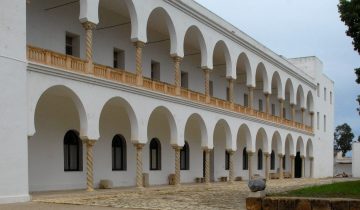
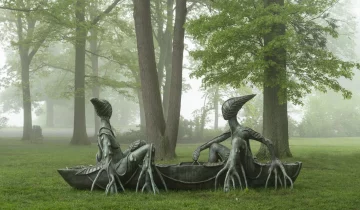
Reading Time: 6 minutesOliewenhuis Art Museum transforms a former presidential mansion into South Africa’s most distinctive art destination. Completed in 1941 to house the Governor General and later State Presidents—including hosting King George VI and his family in 1947—this Neo-Dutch mansion on Bloemfontein’s Grant’s Hill became public art museum in 1989 after years of citizen campaigning. Set within 12 hectares of indigenous gardens featuring outdoor sculpture, the museum showcases South African art from colonial-era painters like Thomas Baines through modernist master Jacob Hendrik Pierneef to contemporary icon William Kentridge. The underground Reservoir—a converted 1904 granite-excavated water catchment—provides dramatically atmospheric exhibition space, while the African Carousel project integrates mythology, movement, and public engagement in outdoor sculpture accessible to all.

National Museum of Ghana in Photos: A Visual Journey Through Accra’s Cultural Heart

Reading Time: 5 minutesThe National Museum of Ghana, established in 1957 during Ghana’s independence year, stands as West Africa’s oldest museum and Accra’s essential cultural institution. Housing collections spanning ancient terracotta sculptures, elaborate royal regalia from Ghana’s historic kingdoms, vibrant kente and adinkra textiles, traditional musical instruments, and contemporary paintings, the museum offers photogenic encounters with Ghanaian cultural heritage. Located in a repurposed colonial structure in central Accra, the museum transforms architectural legacy into space for Ghanaian narratives told from Ghanaian perspectives. From the golden ceremonial objects of Asante royalty to intricate geometric patterns in handwoven textiles, the museum’s collections provide visual evidence of Ghana’s sophisticated artistic traditions and cultural diversity across ethnic groups.

Pierre Bergé Museum of Berber Arts: 15 Masterpieces You Can’t Miss in Marrakech

Reading Time: 5 minutesThe Pierre Bergé Museum of Berber Arts in Marrakech houses one of the world’s finest collections of Amazigh (Berber) artistic heritage, representing decades of collecting by Yves Saint Laurent’s business partner. Opened in 2017 adjacent to the legendary Majorelle Garden, the museum showcases extraordinary textiles, jewelry, pottery, and ceremonial objects from Morocco’s indigenous cultures. From intricately sequined handira wedding blankets requiring months of collaborative labor to massive silver fibulae brooches functioning as portable wealth and protective amulets, the collection celebrates technical mastery and aesthetic sophistication. Studio KO’s contemporary architecture provides elegant backdrop for these masterworks, while exhibitions explore how Berber visual traditions profoundly influenced Saint Laurent’s haute couture designs.

Mohammed VI Museum of Modern and Contemporary Art: Rabat’s Crown Jewel Unveiled

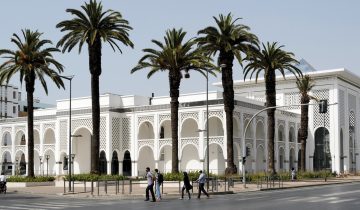
Reading Time: 5 minutesThe Mohammed VI Museum of Modern and Contemporary Art (MMVI) represents Morocco’s most ambitious cultural project, transforming Rabat into North Africa’s contemporary art capital. Inaugurated in 2014 with over 7,600 square meters of exhibition space, this institution charts Moroccan artistic evolution from early 20th-century modernism through cutting-edge contemporary practice. Unlike ethnographic museums, MMVI celebrates living creative production—showcasing the Casablanca School’s abstract calligraphic innovations alongside contemporary video installations and photography. The museum’s architectural design by Karim Chakor merges traditional Moroccan geometric patterns with contemporary minimalism, while its programming positions Moroccan art within broader African, Mediterranean, and global contexts.

Top Art Museums in the USA for African & Contemporary Art: The Complete 2025 Guide

Reading Time: 5 minutesDiscover America’s finest African art collections in this comprehensive guide to top art museums in the USA. From the Smithsonian’s National Museum of African Art—the only US institution dedicated exclusively to African art with over 12,000 objects—to The Metropolitan Museum’s transformative Rockefeller Wing and LACMA’s cutting-edge contemporary programming, this guide navigates essential destinations for experiencing Africa’s artistic legacy. Learn which museums showcase contemporary masters like Chéri Samba and Ablade Glover, when to visit for special exhibitions, and how smaller institutions are challenging traditional canons with innovative curatorial approaches.

The Louvre Heist and the Ghost of 1911: What If the Mona Lisa Had Been Next?

Reading Time: 3 minutesMasked thieves with power tools breached the Louvre in broad daylight, smashing display cases and escaping with France’s crown jewels on scooters. One in three rooms had no cameras. The alarm was broken.
This time, they took tiaras and emeralds. But Sunday’s heist forces an uncomfortable question: if the Galerie d’Apollon could be breached so easily, what prevents a similar assault on the Mona Lisa?

Stealing the Mona Lisa: How Theft Built the Most Famous Brand in Art History

Reading Time: 8 minutesThe Mona Lisa wasn’t always the most famous painting in the world. That didn’t happen in a museum—it happened in a headline. When she was stolen in 1911, everything changed. This article breaks down how scandal, scarcity, and media obsession turned her into an icon—and what modern brands can learn from the heist that made her immortal.

From Symbol to System – How to Turn Any Image Into a Cultural OS

Reading Time: 11 minutesMost creators want a logo. Some want an icon. But very few understand how to build a system. The Mona Lisa wasn’t designed to be shared, remixed, memed, parodied, studied, or projected onto T-shirts, textbooks, and TikToks. Yet she became the most distributed visual artifact in history. Not because she was static. But because she was usable
Art Fairs for Investors: Navigating Basel, Frieze and International Markets

Reading Time: 11 minutesNavigate the world’s premier art fairs like Basel, Frieze, and international markets with expert investment strategies. Master fair timing, dealer relationships, acquisition techniques, and professional networking to access museum-quality artworks and maximize returns through strategic participation in global art market events.

The Empty Room Principle – Why Silence Builds Cultural Power

Reading Time: 4 minutesIn a culture built on noise and speed, the most powerful rooms don’t say more—they subtract. This article explores how silence, scale, and emptiness can install reverence faster than spectacle ever could. If you’re building cultural space, product experience, or brand infrastructure, this is your blueprint for authority through design restraint.

Why the Mona Lisa Can’t Be Sold—and What That Teaches Us About Non-Transferable Cultural Assets

Reading Time: 5 minutesThe Mona Lisa is the most valuable painting in the world—and you can’t buy her. Not now. Not ever. That’s not a limitation. It’s the source of her power. In a market obsessed with liquidity and speed, this article breaks down why the most dominant cultural assets are the ones that can’t be owned, sold, or flipped—and what it means to build something unbuyable in 2025.

The Museum of Self – When Identity Becomes the Exhibit

Reading Time: 4 minutesMuseums no longer exist just to showcase culture—they now host it. And in the process, the visitor has become the exhibit. This essay unpacks how self-performance has overtaken reverence, why it isn’t narcissism but a new kind of ritual, and how creators, curators, and brands can build spaces that let the audience see themselves—without losing the story.

Mona Lisa vs. Memecoins: What Makes an Icon Valuable in the Attention Economy?

Reading Time: 6 minutesWhat does the Mona Lisa have in common with a memecoin? Everything—once you understand how value is really created. In a world where attention trumps utility, and belief is more valuable than function, icons like Mona and Doge prove the same truth: culture rewards what’s repeated, not what’s rational. This article breaks down how both became unstoppable—and what you need to build if you want the same.

Close
Sign in
Close
Cart (0)

No products in the basket. No products in the basket.


Currency


Change Pricing Plan

We recommend you check the details of Pricing Plans before changing. Click Here


EUR12365 daysPackage2 regular & 0 featured listings


EUR99365 daysPackage12 regular & 12 featured listings


EUR207365 daysPackage60 regular & 60 featured listings