

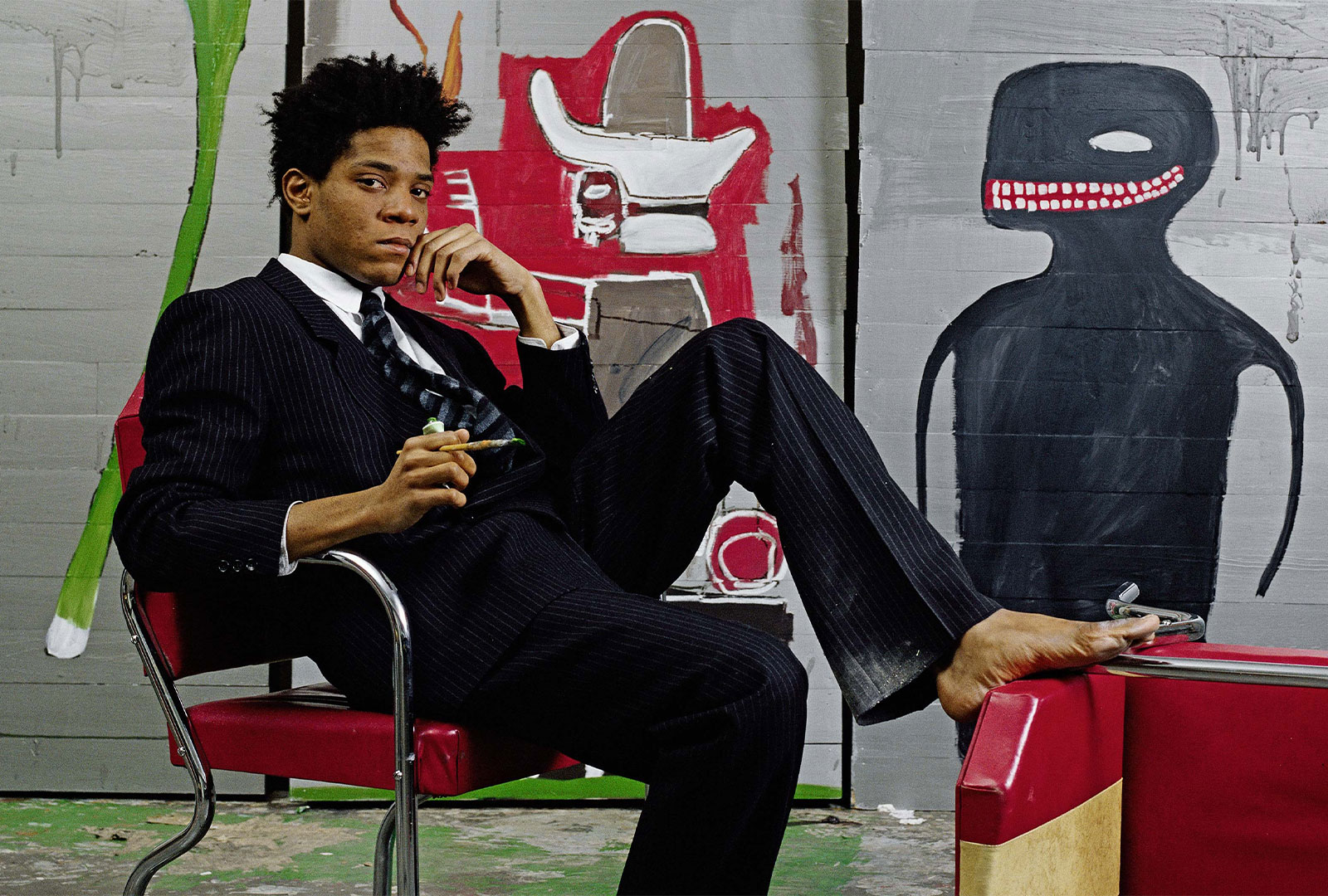
In May 2017 a skull painted by a twenty-one-year-old in 1982 sold at Sotheby’s for $110.5 million. It was the first work by an American artist made after 1980 to pass $100 million at auction, and it made Jean-Michel Basquiat — dead at twenty-seven, largely dismissed by critics in his lifetime — more expensive than any American painter except a small handful.
The interesting part is what surrounds that number. Kerry James Marshall’s record for a living African American artist is $21.1 million. Julie Mehretu’s record for any African-born artist is $10.7 million. Ben Enwonwu, the most significant Nigerian modernist of the twentieth century, has a record of about £1.2 million. One outlier and then a very steep drop.
What follows is twenty-five artists across three continents and 150 years, with what each is known for, the firsts they achieved, and where the market has actually placed them.
The Highest Auction Results
The Modernists
Ben Enwonwu (1917–1994, Nigeria) — the most consequential African modernist of the century, and the artist who sculpted Queen Elizabeth II from life in 1957. His portrait Tutu was lost for decades, turned up in a north London flat in 2018 and sold at Bonhams for around £1.2 million. It is sometimes called the African Mona Lisa, which undersells a painter who was arguing about the terms of African modernism before most of his European contemporaries knew the argument existed.
Ibrahim El-Salahi (b. 1930, Sudan) — a founder of the Khartoum School, fusing Arabic calligraphy, Islamic decoration and African form into something entirely his own. In 2013 he became the first African artist given a full retrospective at Tate Modern. He has a one-artist stand at Frieze London in October 2026.
Alma Thomas (1891–1978) — a Washington schoolteacher for thirty-five years who painted seriously only in retirement, developed her mosaic-like abstractions in her seventies, and became the first African American woman with a solo exhibition at the Whitney in 1972, aged eighty-one.
Romare Bearden (1911–1988) — the great American collagist, who assembled Black life in the South and in Harlem from magazine fragments and painted paper. His work does something jazz does: improvisation over a strict structure.
Elizabeth Catlett (1915–2012) — sculptor and printmaker who spent most of her career in Mexico, making Black women monumental at a time when American art would not.
Charles White (1918–1979) — a draughtsman of extraordinary control whose murals and drawings taught a generation. Kerry James Marshall and David Hammons were both his students.
William H. Johnson (1901–1970) — trained in academic realism in Europe, then deliberately abandoned it for a flattened folk style that reads as naive and is nothing of the kind.
Faith Ringgold (1930–2024) — took quilting, dismissed as craft, and made it carry American history painting. Die (1967) is in MoMA.
Betye Saar (b. 1926) — still working in her late nineties. The Liberation of Aunt Jemima (1972) put a rifle in a racist figurine’s hands.
Howardena Pindell (b. 1943) — painter, and from 1967 the first African American woman curator at MoMA. Her punched-paper canvases took abstraction somewhere new.
David Driskell (1931–2020) — artist and, decisively, the curator whose 1976 exhibition Two Centuries of Black American Art established the field as a field.
Sam Gilliam (1933–2022) — took the canvas off the stretcher and draped it. In 1972 he became the first Black American artist to represent the United States at the Venice Biennale.
The Photographers
Seydou Keïta (c.1921–2001, Mali) — photographed Bamako’s emerging middle class in his Bamako studio from 1948, with borrowed suits, watches and scooters as props. His subjects are composing themselves for the future, and the portraits are among the finest of the twentieth century in any country.
Malick Sidibé (1936–2016, Mali) — photographed the parties. Where Keïta made formal portraits, Sidibé documented Bamako’s youth dancing through the 1960s and 70s. In 2007 he became the first African artist and the first photographer to win the Golden Lion for Lifetime Achievement at Venice.
Gordon Parks (1912–2006) — the first Black staff photographer at Life, and later the first Black director of a major Hollywood studio film. American Gothic, Washington, D.C. (1942) is among the most reproduced photographs in American history.
The Contemporary Canon
Jean-Michel Basquiat (1960–1988) — began as SAMO writing on downtown Manhattan walls and was in the Whitney Biennial at twenty-two. His paintings hold anatomy, jazz, Black history and colonial violence in the same crowded surface. The $110.5 million Untitled remains the record for any American artist of his generation.
El Anatsui (b. 1944, Ghana) — builds vast shimmering hangings from flattened bottle caps and copper wire, made in Nsukka, Nigeria, and installed differently every time so that no two showings are the same work. Golden Lion for Lifetime Achievement at Venice in 2015, and the Turbine Hall commission at Tate Modern in 2023.
Yinka Shonibare CBE (b. 1962, Britain/Nigeria) — uses Dutch wax fabric — Indonesian in technique, Dutch in manufacture, African in identity — to make an argument about authenticity that the material makes before the sculpture does.
Kerry James Marshall (b. 1955) — paints Black figures in unmixed black pigment, insisting on presence within the Western painting tradition rather than alongside it. Past Times made $21.1 million in 2018, a record for a living African American artist.
Kara Walker (b. 1969) — cut-paper silhouettes deploying the most genteel medium in art history against the least genteel subject in American history. A MacArthur Fellow at twenty-seven.
Kehinde Wiley (b. 1977) — places contemporary Black subjects into the compositions of European state portraiture. Painted Barack Obama’s official portrait in 2018.
Julie Mehretu (b. 1970, Ethiopia) — layered architectural abstraction built from maps, plans and erasure. Her $10.7 million result in November 2023 is the highest ever paid for a work by an African-born artist.
Lubaina Himid (b. 1954, Zanzibar/Britain) — a central figure of the British Black Arts Movement of the 1980s who spent thirty years overlooked, then became the first Black woman to win the Turner Prize in 2017, at sixty-three.
Lynette Yiadom-Boakye (b. 1977) — paints fictional people from imagination rather than sitters, usually within a single day, in a tradition running through Manet.
Njideka Akunyili Crosby (b. 1983, Nigeria) — layered interiors combining painting, drawing and photographic transfer, holding Lagos and Los Angeles in one room. Record $4.7 million in 2022.
The Harlem Renaissance and What Came After
Several artists on this list only make sense against the movement that made their careers possible. Between roughly 1918 and the mid-1930s, Harlem became the centre of Black intellectual and artistic life in the United States, and the visual art produced there did something specific: it argued that Black subjects belonged in serious painting and sculpture at a moment when American museums did not agree.
Augusta Savage (1892–1962) ran the studio that trained much of the next generation, including Jacob Lawrence and Norman Lewis. Much of her own sculpture was made in plaster because bronze was beyond her means, and has not survived — a loss that tells you as much about the period as the surviving work does.
Aaron Douglas (1899–1979) developed the flattened, silhouetted style that became the movement’s visual signature, drawing on Egyptian and West African form deliberately rather than decoratively.
Jacob Lawrence (1917–2000) painted the Migration Series in 1941 — sixty panels tracing the movement of six million Black Americans out of the rural South. He was twenty-three. MoMA and the Phillips Collection each bought half, and the series has been shown together only occasionally since.
The line from Savage’s studio to Charles White’s teaching to Kerry James Marshall’s studio is direct and traceable. What looks like sudden institutional interest since 2015 rests on a century of work done without it.
The Bamako Studios
Keïta and Sidibé deserve more than the two paragraphs above, because their reputation followed an unusual route and it explains something about how African art enters the Western canon.
Both worked as commercial portrait photographers in Bamako — not as artists in any sense they would have recognised at the time, but as businesses serving a clientele who paid to be photographed well. Keïta kept a stock of props: a radio, a watch, a Vespa, European suits. Sitters posed with objects they did not own, in front of patterned cloth backdrops he changed regularly, which is how his negatives can now be dated.
Sidibé worked at night, at the parties, following Bamako’s young people through the surf-music and twist era after independence in 1960. He would develop the prints overnight and sell them at the door the following evening.
Neither was known outside Mali until the 1990s, when European curators began arriving with contracts. The subsequent disputes over negatives, printing rights and authorship were substantial and are worth understanding before buying: a Keïta print made in the 1950s in Bamako and a Keïta print made in Paris in the 1990s are very different objects at very different prices, and both are legitimately his.
Where the Institutions Have Moved
The shift since 2015 has been substantial and is worth stating with specifics rather than as a general impression.
Tate Modern gave Ibrahim El-Salahi a full retrospective in 2013, the first for an African artist, and handed El Anatsui the Turbine Hall in 2023. The Venice Biennale awarded Golden Lions for Lifetime Achievement to Sidibé in 2007 and El Anatsui in 2015. The Smithsonian’s National Museum of African American History and Culture opened in 2016. Zeitz MOCAA opened in Cape Town in 2017 and, after a difficult founding period, was rebuilt into a serious institution under Koyo Kouoh.
Against that, a caution that the field’s own critics keep making: acquisition is not the same as scholarship. Buying work is faster than building the archives, catalogues raisonnés and specialist expertise that determine whether this decade’s attention proves durable. For most of the artists in this list, no catalogue raisonné exists at all — which is precisely what makes attribution difficult and prices volatile.
What the Market Actually Shows
Three things are worth reading out of the numbers rather than around them.
One artist distorts the entire picture. Basquiat’s $110.5 million is more than five times the next highest result by any Black artist. Averages that include him describe nothing.
The African modernists remain undervalued relative to their significance. Enwonwu founded a national artistic identity and his record sits near £1.2 million. El-Salahi has a Tate retrospective and prices that would embarrass a mid-career American painter. The gap is about who was collecting in the 1960s, not about the work.
The compression is real for the living. Marshall, Wiley, Mehretu, Crosby and Yiadom-Boakye were all collected seriously by major institutions within a decade of their first significant shows. Alma Thomas waited until she was eighty-one. That change happened within one working lifetime.
Buying Work by These Artists
Two practical warnings if you are looking at the secondary market rather than reading for interest.
Basquiat authentication is genuinely difficult. The Basquiat Authentication Committee disbanded in 2012, as many artist authentication boards have, after sustained litigation from owners of rejected works. There is now no body issuing definitive opinions, which means attribution rests on provenance, scientific analysis and specialist judgement — and that his market carries more forgery risk than almost any other.
For African modernists, provenance is frequently thin by circumstance. Works by Enwonwu, El-Salahi and their contemporaries often passed through private hands with little documentation, and the archives that would corroborate a chain were rarely kept. That is not a reason to avoid the field — it is a reason to do the work before buying.
Frequently Asked Questions
Who is the most famous Black artist in history?
By market value and public recognition, Jean-Michel Basquiat. By influence on other artists, the stronger cases are Romare Bearden, Charles White and Kerry James Marshall, all of whom taught or shaped generations directly.
Which Black artist sells for the most at auction?
Basquiat, whose Untitled (1982) made $110.5 million at Sotheby’s in 2017. Among living artists the record is Kerry James Marshall’s $21.1 million; among African-born artists, Julie Mehretu’s $10.7 million.
Who was the first African artist to win the Golden Lion at Venice?
Malick Sidibé, in 2007, for lifetime achievement — also the first photographer to receive it. El Anatsui received the same award in 2015.
Who are the most important African modernists?
Ben Enwonwu in Nigeria, Ibrahim El-Salahi in Sudan, and the Bamako photographers Seydou Keïta and Malick Sidibé. All four are undervalued relative to their historical significance.
Where can I see work by Black artists?
The Studio Museum in Harlem, the Smithsonian’s National Museum of African American History and Culture, Tate Modern, Zeitz MOCAA in Cape Town and the Brooklyn Museum hold the deepest collections. Most major museums have acquired significantly since 2015.
How do I start collecting work by Black artists?
Buy from living artists and their galleries, where the provenance chain begins in the studio and you are the first owner after it. Prints and works on paper are the accessible entry point, and the primary market carries none of the attribution risk of the secondary one.
Values in this field have moved faster than most owners realise, and works by African modernists in particular are frequently insured at figures set decades ago. We provide written valuations assessed against comparable auction results, condition and provenance.
Auction figures verified against published results, September 2026. Further reading: thirty influential Black women artists, who can actually authenticate a painting, African art provenance, and African art at the autumn sales.


 No products in the basket.